
La Ville-Monde
The inflow of migrants to the north of France has increased considerably since the end of 2015. Against the opinion of the state, the mayor of Grande-Synthe, supported by Doctors Without Borders, has opened a “temporary humanitarian camp” for 2,500 refugees in a locality known as La Linière.
Cyrille Hanappe, a utopian architect, feels that the provisional can sometimes becomes permanent. He believes that this ephemeral construction should be considered as a new neighbourhood of the town, which would open a range of possibilities for both the refugees who settle there and for the inhabitants who welcome them.
What inspiration can be born of a will to change the world when urgency sweeps away all energies?
| Genre | Documentary |
| Language | French |
| Subtitles | English |
| Executive producers | Les Films du Balibari |
| Coproduction | Stenola Productions and Filmtank |
| Partners | France 3, RTBF (Belgian television), Pictanovo, la Région des Pays de la Loire, la Région Hauts-de-France, MFG Filmförderung Baden-Wüttemberg |


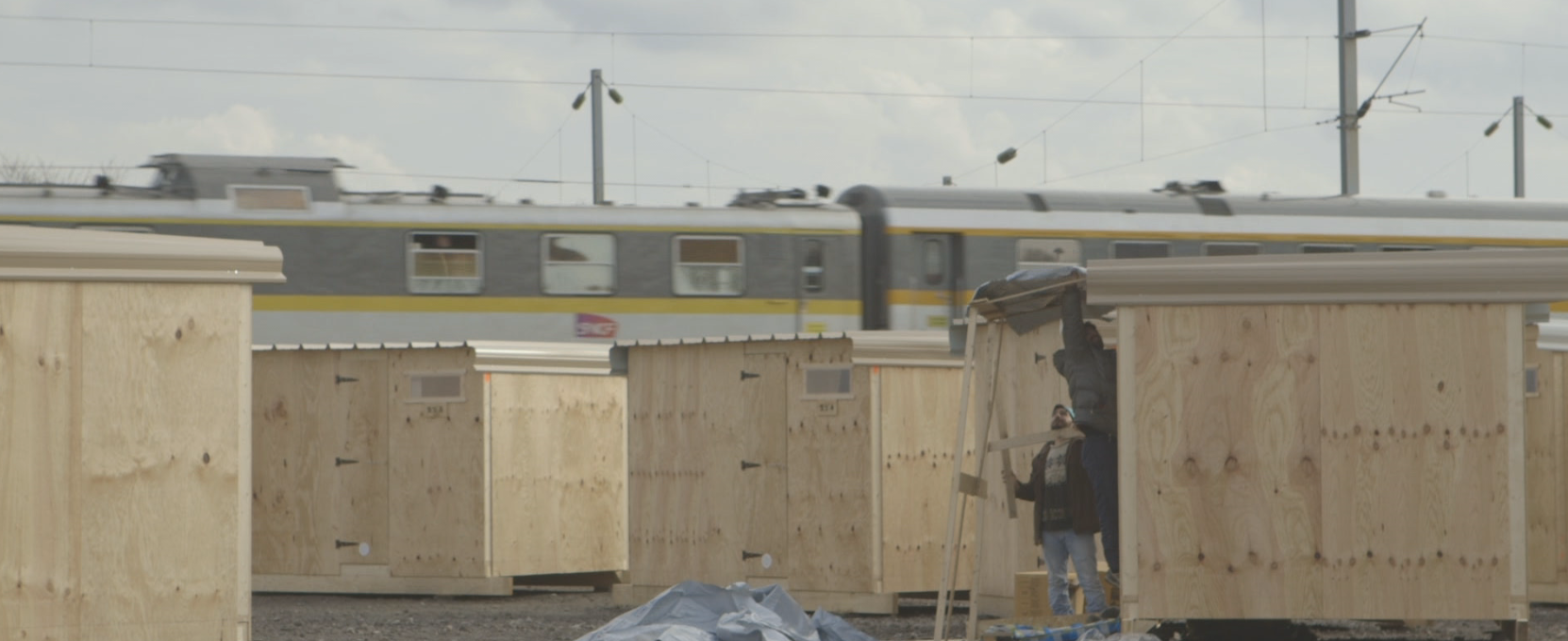
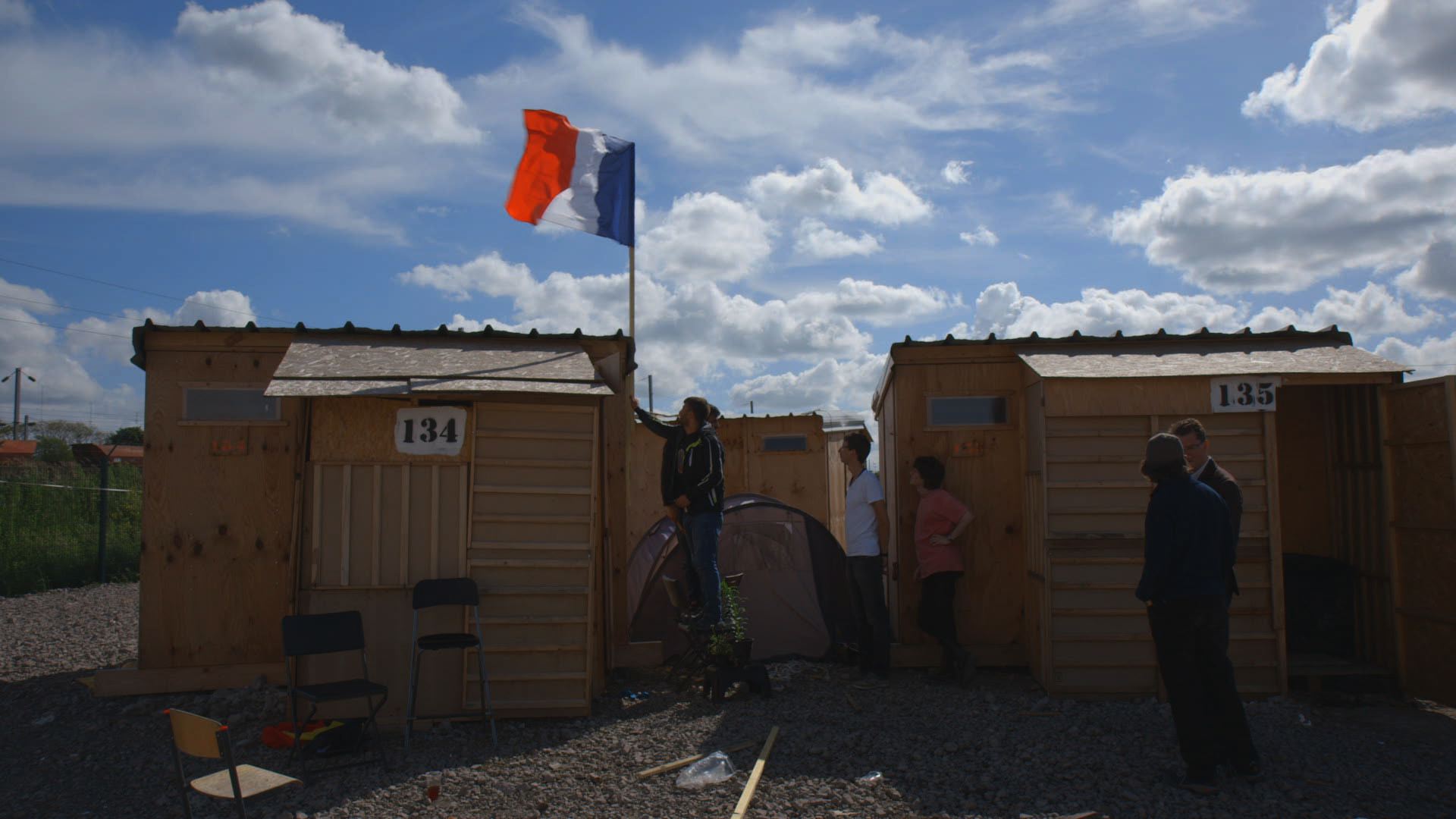

Located between a freight railway line and the A16 motorway, with its 300 wooden cabins, its main street, and its lunar landscape, the camp strikes me as much as a Western set as a science fiction film. Thanks to the town hall's support and its location just two kilometers from a supermarket, architect Cyrille Hanappe immediately envisioned a neighborhood in the making. Intrigued by the idea of following the clash between Cyrille's utopian vision and the realities on the ground, I decided to document his work, observing the camp's evolution from its opening to the upcoming presidential elections. The camp itself seems like a character in its own right, with its hopes and crises, like a living organism that expands and contracts with the seasons, arrivals, and departures. The Linière camp is a profoundly humanist place. The City Hall's initial focus was on meeting the refugees' most basic needs: safety, healthcare, protection from the cold, thirst, hunger, and fear. However, once survival was assured, minds began to wander, needs shifted, and living together became a dilemma. Linière immediately refused to become the hellish, anarchic scene of the Jungle. But living together also means envisioning the future and ensuring its sustainability. Cyrille walks the length and breadth of the camp, trying to rally those involved to this vision. And this positive vision could breathe new life into society… In this respect, his approach resonates deeply with me.
This humanist vision will be reinforced by other stakeholders. First and foremost, Damien Carême, the mayor of Grande-Synthe, the humanist politician. The mayor has long been the citizens' favorite political figure, the one best positioned to understand the meaning of well-being in the city. Damien Carême and his dedicated team (Olivier Caremelle, Jean-Christophe Lipovac, Philippe Druesne) will face the political challenges that are emerging. They have given me exclusive access to follow their work.
Antarès Bassis
Crew
| Director | Antarès Bassis |
| Script | Antarès Bassis, Sonia Moyersoen |
| Photography | Adrien Rivollier |
| Sound | Olivier Pioda, Marc Parazon |
| Editing | Marie-Hélène Mora |
| Frédéric Fichefet | |
| Sound editing | Jean-Marc Schick |
| Mixing | Tilo Ehmann |
| Original music | Daniel Elias Brenner, Karol Obara |
| Producer | Estelle Robin You |
| Coproducer | Anton Iffland Stettner, Eva Kuperman, Anna-Luisa Diesel, Julia Cöllen |
| Production Manager | Armel Parisot, Sybille de Prunelé, Emilie Derepas |
| Post-production supervisor | Olan Bowland, Carster Schuffert, Nina Liewald |
Festivals
| France | Douarnenez Festival - Grand Cru Brittany selection* |
| France | Grand Bivouac Festival |